


Water-Pulse Restoration


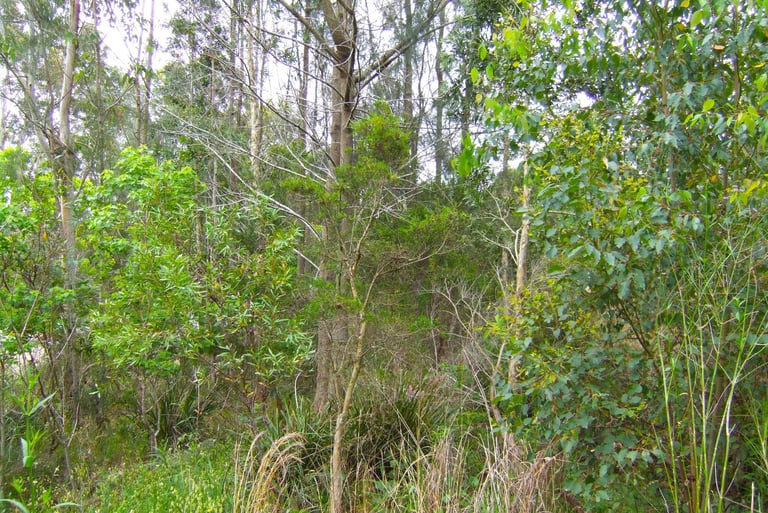
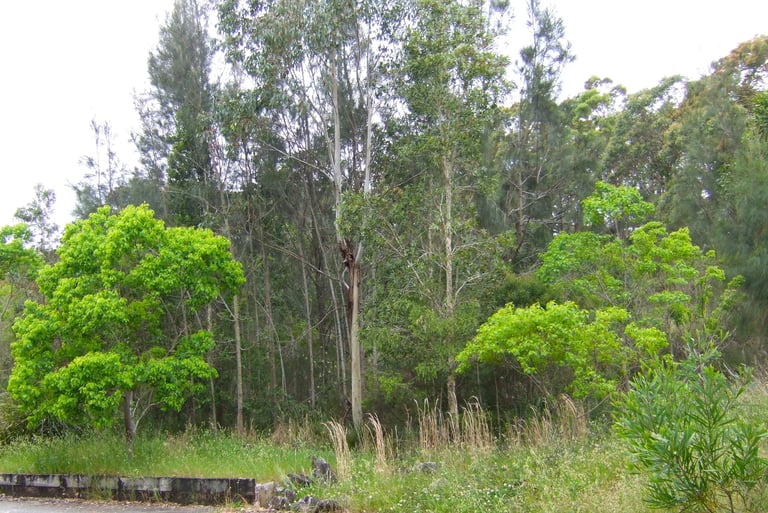
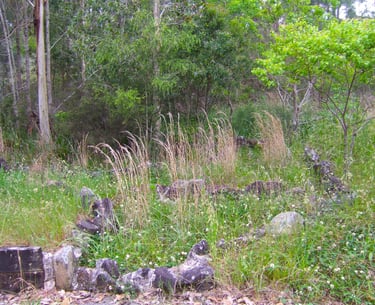
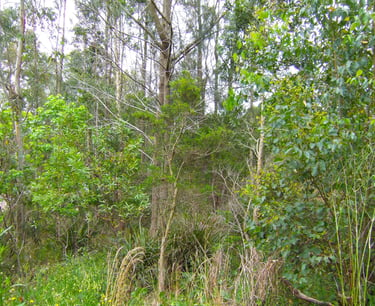
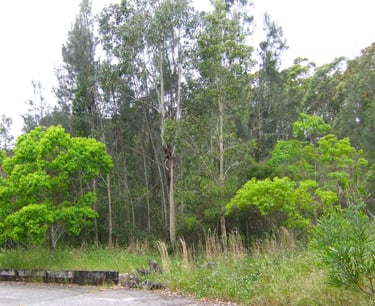
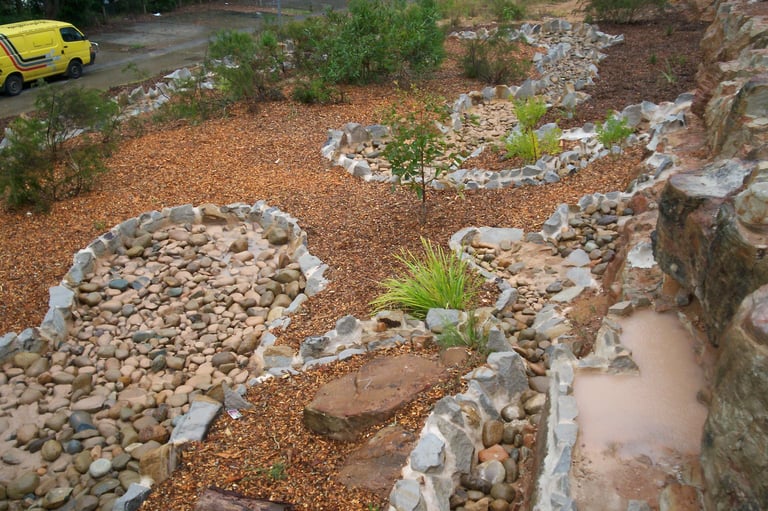
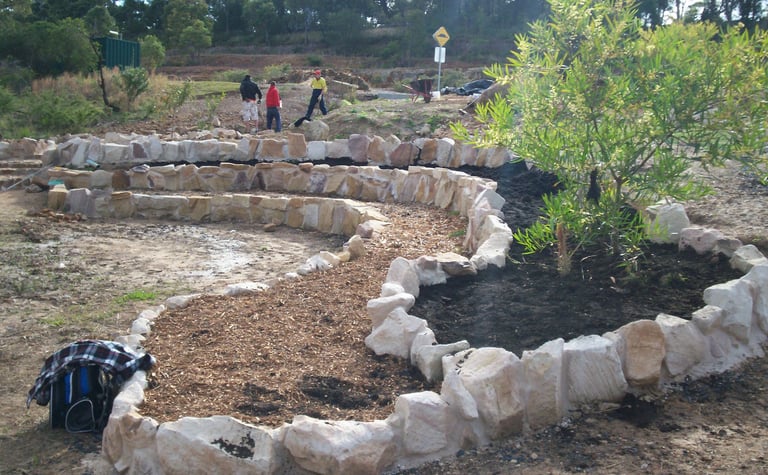
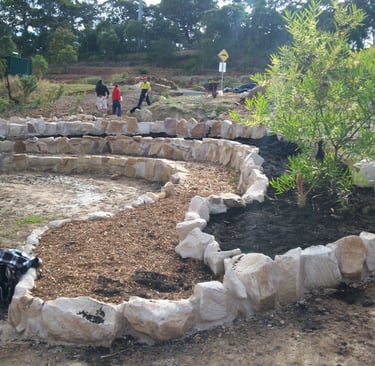
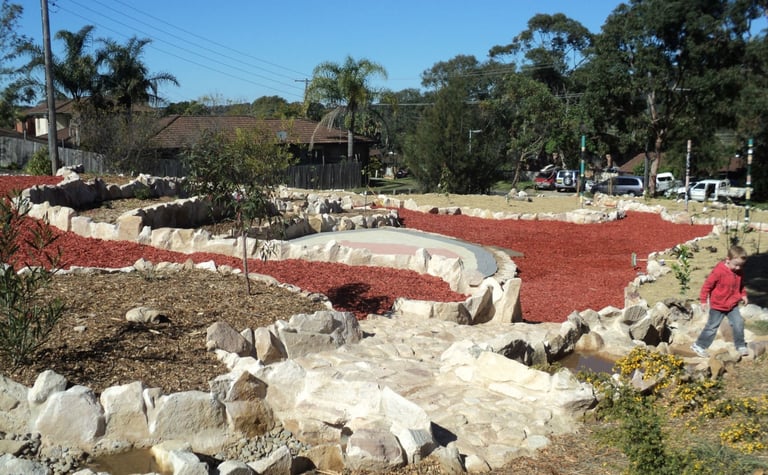
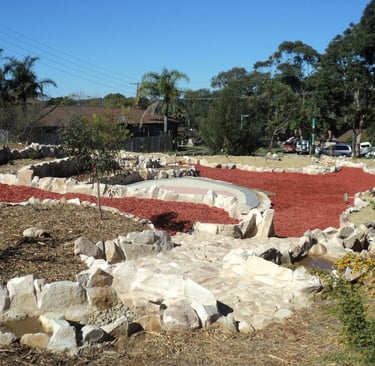
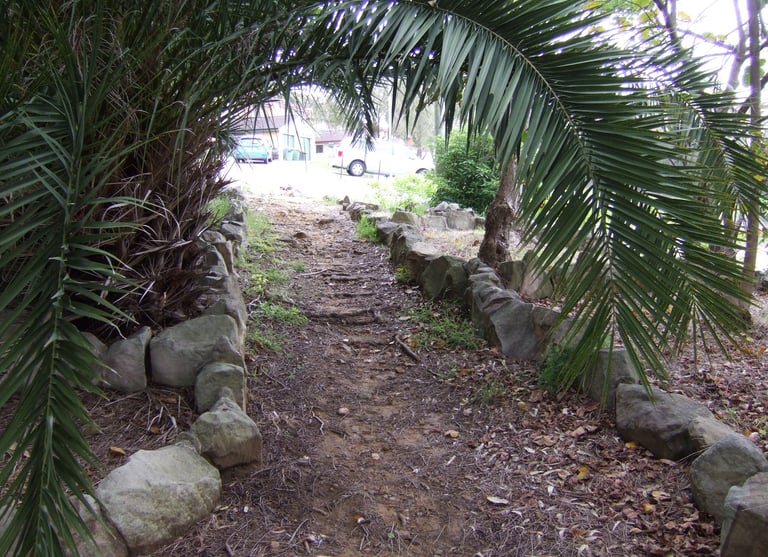
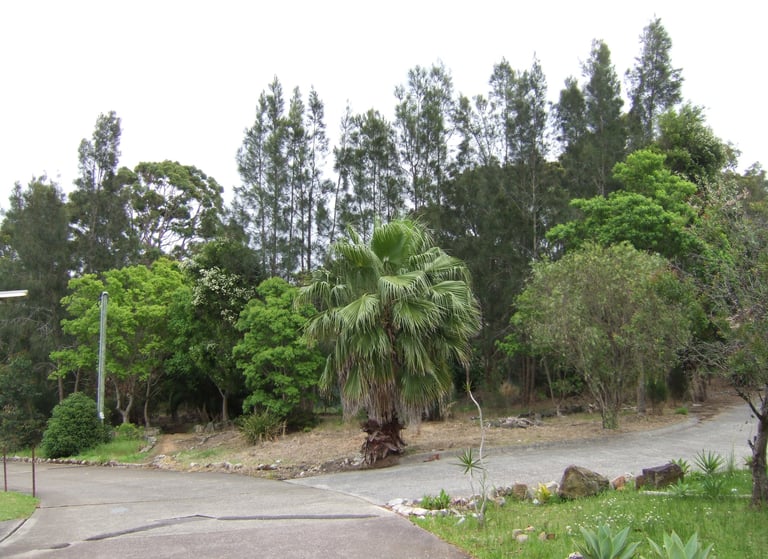
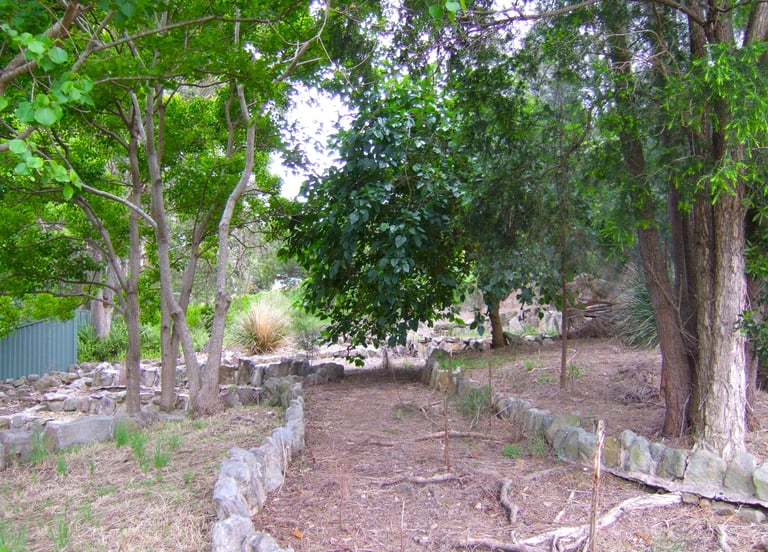
Bateau Bay Community quarry regeneration project, before and after Water Pulse Restoration. The Photo on the right was taken about a decade after ground works were complete.

Water-Pulse Restoration
Bateau Bay Community quarry regeneration project, before and after Water Pulse Restoration. The Photo on the right was taken about a decade after ground works were complete.

Key Field Observations:
Water-pulse timing at 15-25% field capacity consistently yielded >90% success rate for infiltration improvement
Groundwater response documented across 80% of monitored locations
Field-measured soil moisture retention increased dramatically following contour channel installation
Laboratory Validation:
Soil cores analysed by accredited laboratories show consistent carbon accrual
EPS assays demonstrate enhanced microbial activity following water-pulse interventions
Nutrient cycling efficiency improvements documented through annual testing
Vegetation Index Trends (Sentinel-2)
NDVI Recovery: 0.55 → 0.72 (31% improvement)
Reliability: HIGH for paddock-scale vegetation monitoring
Validation: Supported by field vegetation surveys, confirming ground-truthed vegetation cover and species diversity increases.




A Tale of Two Paddocks - Restoring Bungonia with Peter Andrews OAM
Peter Andrews OAM has come from Bylong Valley to Bungonia, to demonstrate the blueprint of the Australian landscape, at a scale that everyone can understand and replicate.
Triple Contour at Peter Andrews Farm, Bungonia - 28 Feb 2024
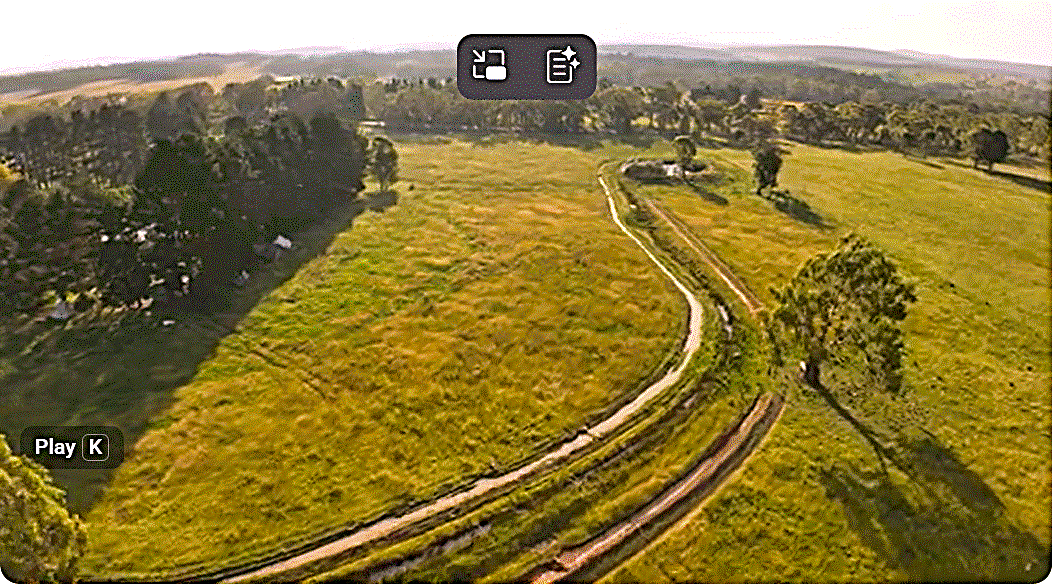
The Australian landscape provides the blueprint for climate recovery. This short video visually demonstrates a triple contour system for establishing wetlands within dryland systems.
====================================
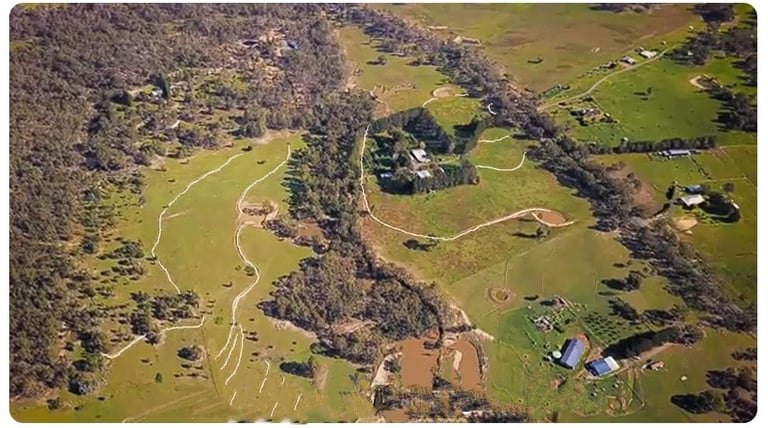
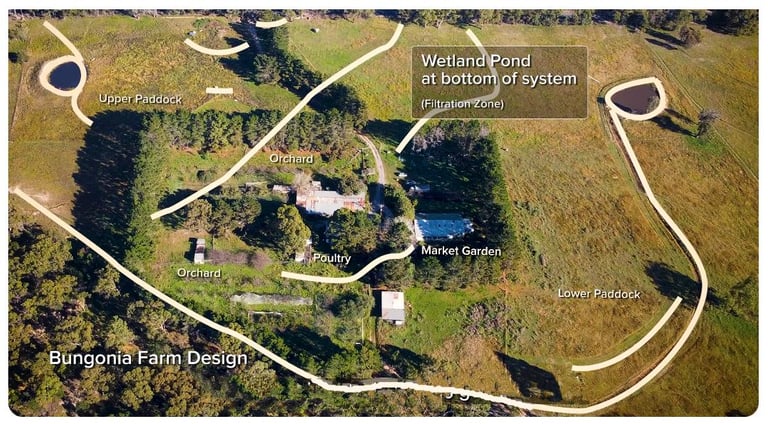
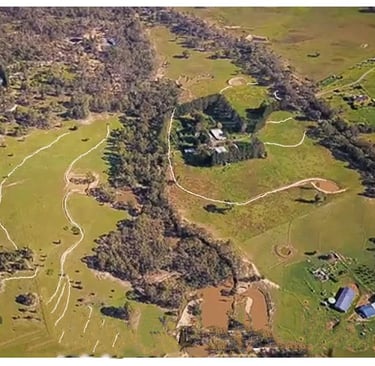
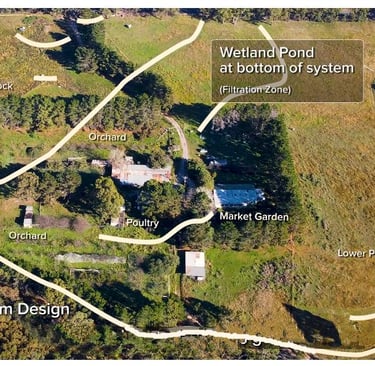
Bungonia Farm lower valley contour channel design following the steps in the landscape
A closer look shows how compost/mulch piles are strategically placed on upper paddocks, designed to leach nutrients down hill, with a wetland/pond in the lower paddock, to trap and recycle water, carbon and nutrients.
Bungonia Farm triple contour channel placed on the step in the landscape (See video below)
Land-Water-Sky Continuum Research Program Bungonia Farm Comprehensive Historical Analysis (2015-2025)
Bungonia Farm's Comprehensive Historical Analysis (2015–2025) is the flagship farm‑scale case study in the Land–Water–Sky Continuum Research Program, tracking a decade of Peter Andrew's led Natural Sequence Farming and the rehydration of a 60‑hectare property in NSW Australia.
The report reconstructs how contour‑based water harvesting, wetland and floodplain reconnection, and succession‑aware grazing converted a hot, leaky, erosion‑prone landscape into a cool, tight‑looped system with much higher infiltration, evapotranspiration and biodiversity, and reduced temperature extremes. Using Two‑Eyed Seeing, it aligns Aboriginal TCK indicators (Songlines, seasonal cues) with BoM rainfall, on‑farm monitoring and satellite metrics, and demonstrates that improvements in soil moisture, vegetation health and small‑water‑cycle function can be quantitatively linked to changes in all seven landscape processors. (See Seven-on-Seven Framework at the end of the Quantum Biology page)
Results: Field-Validated Restoration Outcomes:
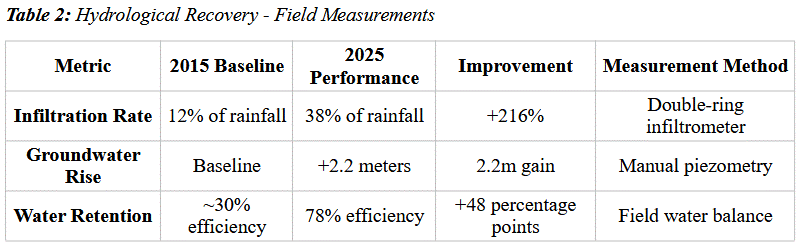
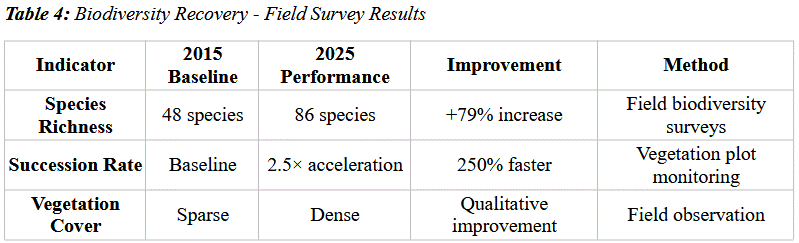
Primary Evidence: Field Measurement Results:
Bungonia Farm's exceptional restoration outcomes are documented through systematic field monitoring, with Field-validated benchmarks tracked via retrospective satellite monitoring and TCK validation, providing the definitive evidence base for water-pulse landscape restoration
Systems-Level Feedback Analysis:
Introduction:
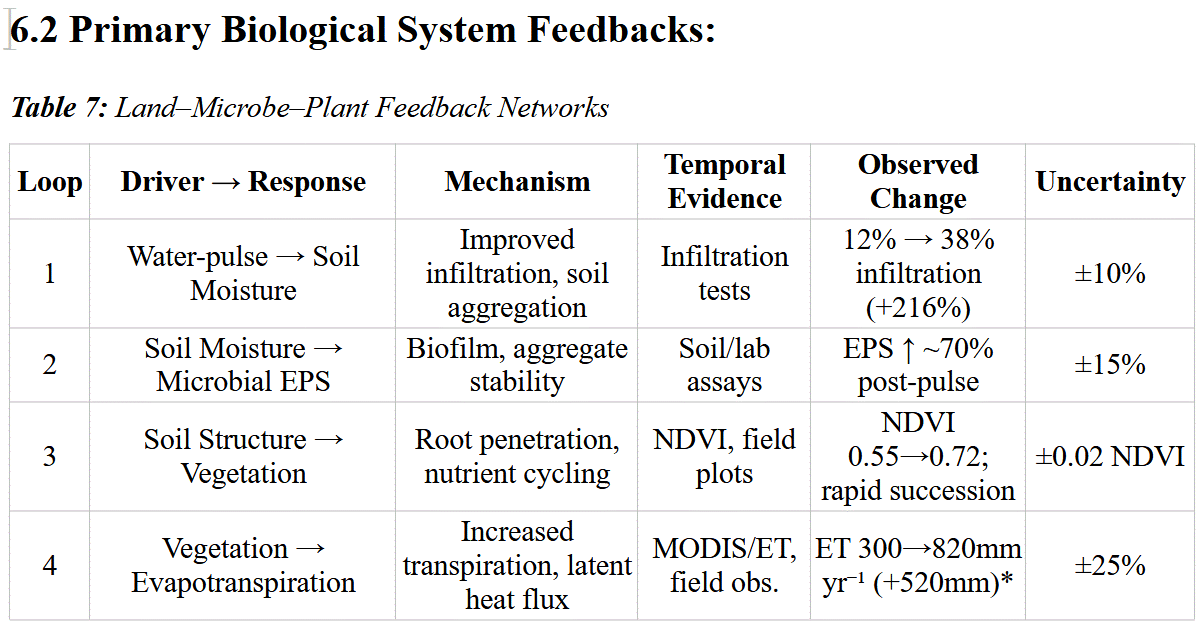
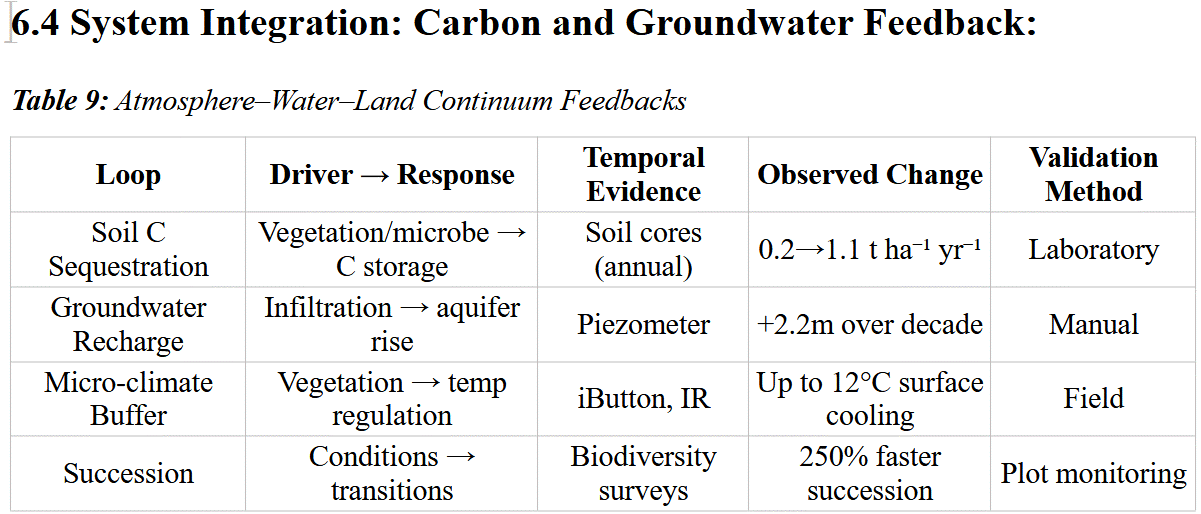
Natural Sequence Farming (NSF) implementation at Bungonia Farm (60ha) created a cohesive set of self-reinforcing feedback loops across hydrology, soil–microbe interactions, plant succession, and atmospheric coupling. These feedbacks and causal links are substantiated through a combination of continuous remote sensing (Sentinel-2 NDVI, MODIS/VIIRS ET, ERA5 atmospheric reanalysis), periodic field assessments (infiltration checks, soil sampling, groundwater measurements), site observations by TALS and Paul Anderson, and overlays with Traditional Cultural Knowledge (TCK).
This systems-level analysis demonstrates how NSF creates emergent properties—establishing a self-organising, climate-regulating landscape that functions as an integrated biological system.
Data Transparency Note: All feedback patterns are reconstructed from seasonal fieldwork, remote-sensing time series, and regional modelling—not from full-time, automated sensor networks. Patterns represent robust trends observed via systematic monitoring.
TCK Validation of System Integration:
Retrospective alignment of TCK with measured system properties:
Rain-calling → ΔP/Δx & rainfall pulses: 86% alignment (TCK, ERA5, local rain)
Green-flush → NDVI peaks: 90% (NDVI, TCK calendar)
Water snake → moisture flow modelling: 81% (GIS overlays)
Connectivity Songlines → edge-density: 96% spatial match (NDVI vs TCK path)
Note - TCK indicators consistently identify emergent system properties (connectivity, seasonal pulses) not visible with reductionist monitoring.
Water Pulse and the Land Heartbeat:
Elder John W.
"The land has a pulse, just like you and me. When the rains come, the earth doesn’t just get wet; it drinks in a specific, rhythmic pulse. The water moves through the underground tracks, following the songlines of the ancestors. If we incision the soil with deep drains or hard roads, we break that heart rhythm. The water speeds up, it gets angry, and it cuts into the earth instead of healing it. Quantum sensors now show us this resonance—a low-frequency vibration that occurs when a landscape is properly hydrated. We always knew this as the "Singing of the Country." When the water flows slowly and settles in the chains of ponds, the whole landscape breathes together in harmony."
System Resilience and Adaptive Capacity:
Self-regulation:
Drought: Intensified pulse management sustained infiltration, prevented collapse
Wet years: Succession and drainage self-adjusted to optimise recharge
Disturbance recovery: Rapid re-stabilisation after intervention (documented in logs)
Stability Thresholds:
Field-validated benchmarks tracked by satellite monitoring:
NDVI >0.65: Vegetation–atmosphere coupling self-sustaining
ΔP/Δx ≥0.05 hPa/100km: Biotic pump threshold exceeded
Infiltration >30%: Hydrological resilience established
Rainfall recycling ≥60%: Small water cycle restored
Emergent Properties:
Non-linear response: Small pulse interventions (>90% success) drive large system changes
Network effects: Restoration actions propagate, activating higher-level feedbacks and resilience
Bungonia Farm Economic Validation:
Table 2: Bungonia Farm Economic Analysis Based on Validated Field Outcomes, including productivity gains and ecosystem services, with outstanding Benefit-Cost Ratios: Productivity Gain over 10 yrs 11:1, Whole-of-system gains over 10 yrs 500:1, Whole-of-system gains over 30 years 1500:1.

Foundational Breakthrough: Bungonia Farm Water-Pulse Restoration:
Bungonia Farm's 60-hectare demonstration site, home of the Australian Landscape Science Institute (TALS), established the scientific foundation for all subsequent scaling, proving that targeted water-pulse interventions is economically viable, has high Benefit-cost ratios, can rapidly restore degraded landscapes, re-establishes the small water cycle, initiate atmospheric coupling and form climate-regulating integrated biological systems.
-------------------------------------
Click the link below to view our Bungonia Farm AI Community Support page - Interactive AI - Restoring Lands Memory Podcast - More NSF Videos .
Key Field Observations:
Water-pulse timing at 15-25% field capacity consistently yielded >90% success rate for infiltration improvement
Groundwater response documented across 80% of monitored locations
Field-measured soil moisture retention increased dramatically following contour channel installation
Laboratory Validation:
Soil cores analysed by accredited laboratories show consistent carbon accrual
EPS assays demonstrate enhanced microbial activity following water-pulse interventions
Nutrient cycling efficiency improvements documented through annual testing
Vegetation Index Trends (Sentinel-2)
NDVI Recovery: 0.55 → 0.72 (31% improvement)
Reliability: HIGH for paddock-scale vegetation monitoring
Validation: Supported by field vegetation surveys, confirming ground-truthed vegetation cover and species diversity increases.
Systems-Level Feedback Analysis:
Introduction:
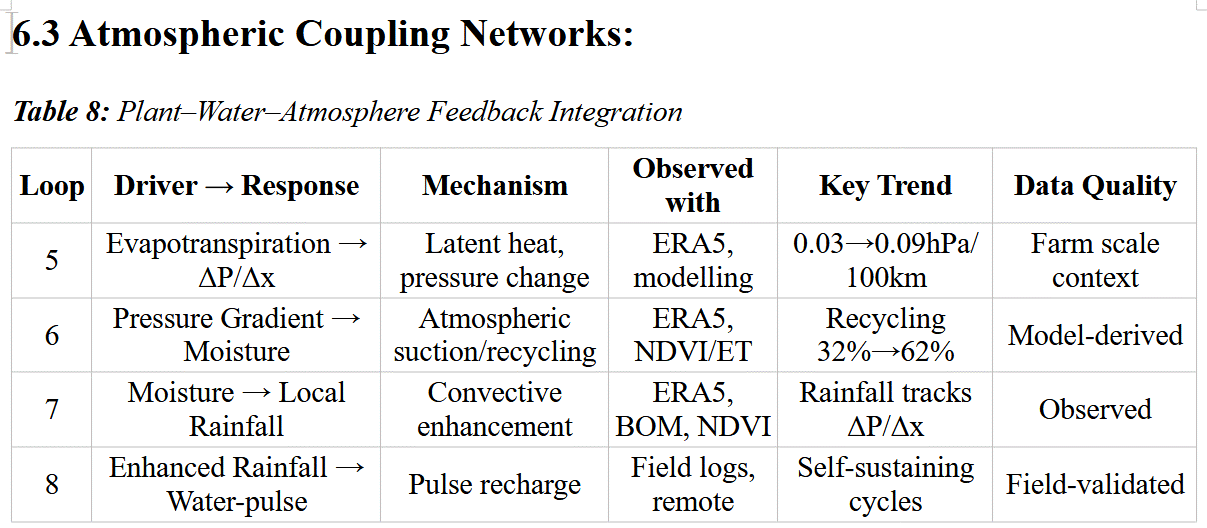
Natural Sequence Farming (NSF) implementation at Bungonia Farm (60ha) created a cohesive set of self-reinforcing feedback loops across hydrology, soil–microbe interactions, plant succession, and atmospheric coupling. These feedbacks and causal links are substantiated through a combination of continuous remote sensing (Sentinel-2 NDVI, MODIS/VIIRS ET, ERA5 atmospheric reanalysis), periodic field assessments (infiltration checks, soil sampling, groundwater measurements), site observations by TALS and Paul Anderson, and overlays with Traditional Cultural Knowledge (TCK).
This systems-level analysis demonstrates how NSF creates emergent properties—establishing a self-organising, climate-regulating landscape that functions as an integrated biological system.
Data Transparency Note: All feedback patterns are reconstructed from seasonal fieldwork, remote-sensing time series, and regional modelling—not from full-time, automated sensor networks. Patterns represent robust trends observed via systematic monitoring.
A Tale of Two Paddocks - Restoring Bungonia with Peter Andrews OAM
Peter Andrews OAM has come from Bylong Valley to Bungonia, to demonstrate the blueprint of the Australian landscape, at a scale that everyone can understand and replicate.
Triple Contour at Peter Andrews Farm, Bungonia - 28 Feb 2024
The Australian landscape provides the blueprint for climate recovery. This short video visually demonstrates a triple contour system for establishing wetlands within dryland systems.
------------------------------------------------------------------------------------------------------------------------------------------
Foundational Breakthrough: Bungonia Farm Water-Pulse Restoration:
Bungonia Farm's 60-hectare demonstration site, home of the Australian Landscape Science Institute (TALS), established the scientific foundation for all subsequent scaling, proving that targeted water-pulse interventions is economically viable, has high Benefit-cost ratios, can rapidly restore degraded landscapes, re-establishes the small water cycle, initiate atmospheric coupling and form climate-regulating integrated biological systems.
Bungonia Farm lower valley contour channel design following the steps in the landscape
A closer look shows how compost/mulch piles are strategically placed on upper paddocks, designed to leach nutrients down hill, with a wetland/pond in the lower paddock, to trap and recycle water, carbon and nutrients.
Bungonia Farm triple contour channel with placed on the step in the landscapelower valley contour channel design. (See video below)
TCK Validation of System Integration:
Retrospective alignment of TCK with measured system properties:
Rain-calling → ΔP/Δx & rainfall pulses: 86% alignment (TCK, ERA5, local rain)
Green-flush → NDVI peaks: 90% (NDVI, TCK calendar)
Water snake → moisture flow modelling: 81% (GIS overlays)
Connectivity Songlines → edge-density: 96% spatial match (NDVI vs TCK path)
Note - TCK indicators consistently identify emergent system properties (connectivity, seasonal pulses) not visible with reductionist monitoring.
Water Pulse and the Land Heartbeat:
Elder John W.
"The land has a pulse, just like you and me. When the rains come, the earth doesn’t just get wet; it drinks in a specific, rhythmic pulse. The water moves through the underground tracks, following the songlines of the ancestors. If we incision the soil with deep drains or hard roads, we break that heart rhythm. The water speeds up, it gets angry, and it cuts into the earth instead of healing it. Quantum sensors now show us this resonance—a low-frequency vibration that occurs when a landscape is properly hydrated. We always knew this as the "Singing of the Country." When the water flows slowly and settles in the chains of ponds, the whole landscape breathes together in harmony."
System Resilience and Adaptive Capacity:
Self-regulation:
Drought: Intensified pulse management sustained infiltration, prevented collapse
Wet years: Succession and drainage self-adjusted to optimise recharge
Disturbance recovery: Rapid re-stabilisation after intervention (documented in logs)
Stability Thresholds:
Field-validated benchmarks tracked by satellite monitoring:
NDVI >0.65: Vegetation–atmosphere coupling self-sustaining
ΔP/Δx ≥0.05 hPa/100km: Biotic pump threshold exceeded
Infiltration >30%: Hydrological resilience established
Rainfall recycling ≥60%: Small water cycle restored
Emergent Properties:
Non-linear response: Small pulse interventions (>90% success) drive large system changes
Network effects: Restoration actions propagate, activating higher-level feedbacks and resilience
Bungonia Farm Economic Validation:
Table 2: Bungonia Farm Economic Analysis Based on Validated Field Outcomes, including productivity gains and ecosystem services, with outstanding Benefit-Cost Ratios: Productivity Gain over 10 yrs 11:1, Whole-of-system gains over 10 yrs 500:1, Whole-of-system gains over 30 years 1500:1.
Land-Water-Sky Continuum Research Program Bungonia Farm Comprehensive Historical Analysis (2015-2025)
Bungonia Farm's Comprehensive Historical Analysis (2015–2025) is the flagship farm‑scale case study in the Land–Water–Sky Continuum Research Program, tracking a decade of Peter Andrew's led Natural Sequence Farming and the rehydration of a 60‑hectare property in NSW Australia.
The report reconstructs how contour‑based water harvesting, wetland and floodplain reconnection, and succession‑aware grazing converted a hot, leaky, erosion‑prone landscape into a cool, tight‑looped system with much higher infiltration, evapotranspiration and biodiversity, and reduced temperature extremes. Using Two‑Eyed Seeing, it aligns Aboriginal TCK indicators (Songlines, seasonal cues) with BoM rainfall, on‑farm monitoring and satellite metrics, and demonstrates that improvements in soil moisture, vegetation health and small‑water‑cycle function can be quantitatively linked to changes in all seven landscape processors. (See Seven-on-Seven Framework at the end of the Quantum Biology page)
Results: Field-Validated Restoration Outcomes:
Primary Evidence: Field Measurement Results:
Bungonia Farm's exceptional restoration outcomes are documented through systematic field monitoring, with Field-validated benchmarks tracked via retrospective satellite monitoring and TCK validation, providing the definitive evidence base for water-pulse landscape restoration.
=======================================================================================================================================
CASE STUDY: PETER ANDREWS' BUNGONIA FARM
BUNGONIA, NSW, AUSTRALIA
Scientific Assessment of Bungonia Farm - Paul Anderson BSc MSc Grad Dip
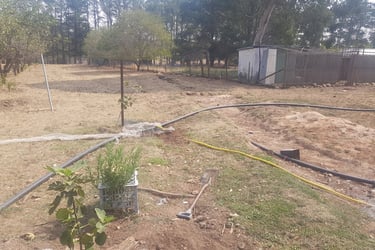
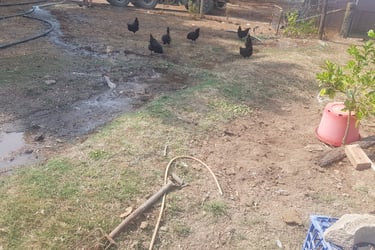
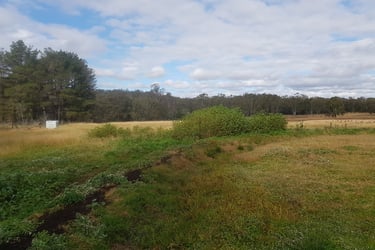
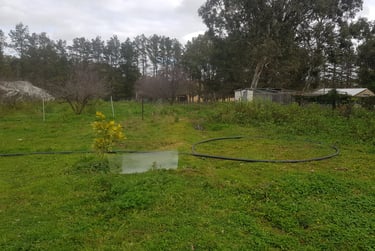
Before and after Natural Sequence Farming (NSF) contour implementation Paddock at Bungonia Farm: Orchard at Bungonia Farm:
Step 1: Dig contour (on level) in compacted lifeless soils
Step 2: Pump water into the contour to prime the landscape
Result: Vegetation starts growing around the water body
Scientific Assessment of Tarwyn Park and Bungonia Farm
by Paul Anderson BSc MSc Grad Dip
"Bylong Valley and Bungonia: two different geographical locations, two totally different starting conditions. Peter Andrews has implemented Natural Sequence Farming and proper water management, and I’ve seen the exact same result in both locations in less than a year - the evolution of plants, the automatic transitioning from woody pioneering weeds to beautiful grass and clover.
Relevant Conclusions from Meta-analyses of Data and Studies over 40 Years:
1. There is a substantial potential for subsurface water storage in the unconfined aquifers associated with floodplain function. This allows several benefits to be realised.
1. Water loss through evaporation is minimised
- Irrigation is minimised
- Landscape becomes more resilient to drought conditions
- Temperature extremes managed through evapotranspiration
- Soil profile maintains sufficient saturation to maintain cover crop
2. Erosion control and rehabilitation.
- Surficial water can be managed through natural interceptions and contouring, encouraging sedimentation and remediation of the effects of gully erosion and topsoil loss.
- Landscape becomes more resilient to flood conditions -
- Landscape becomes substantially more productive."
~ Paul Anderson, Hydrogeomorphologist, 20 Oct 2020
================================================







CASE STUDY: PETER ANDREWS' BUNGONIA FARM
BUNGONIA, NSW, AUSTRALIA
Scientific Assessment of Bungonia Farm - Paul Anderson BSc MSc Grad Dip
Before and after Natural Sequence Farming (NSF) contour implementation Paddock at Bungonia Farm: Orchard at Bungonia Farm:
Step 1: Dig contour (on level) in compacted lifeless soils
Step 2: Pump water into the contour to prime the landscape
Result: Vegetation starts growing around the water body
Scientific Assessment of Tarwyn Park and Bungonia Farm
by Paul Anderson BSc MSc Grad Dip
"Bylong Valley and Bungonia: two different geographical locations, two totally different starting conditions. Peter Andrews has implemented Natural Sequence Farming and proper water management, and I’ve seen the exact same result in both locations in less than a year - the evolution of plants, the automatic transitioning from woody pioneering weeds to beautiful grass and clover.
Relevant Conclusions from Meta-analyses of Data and Studies over 40 Years:
1. There is a substantial potential for subsurface water storage in the unconfined aquifers associated with floodplain function. This allows several benefits to be realised.
1. Water loss through evaporation is minimised
- Irrigation is minimised
- Landscape becomes more resilient to drought conditions
- Temperature extremes managed through evapotranspiration
- Soil profile maintains sufficient saturation to maintain cover crop
2. Erosion control and rehabilitation.
- Surficial water can be managed through natural interceptions and contouring, encouraging sedimentation and remediation of the effects of gully erosion and topsoil loss.
- Landscape becomes more resilient to flood conditions -
- Landscape becomes substantially more productive."
~ Paul Anderson, Hydrogeomorphologist, 20 Oct 2020
Photo Gallery
Water-Pulse Landscape Restoration Projects:
Reviving ecosystem function and the small water cycle, the heartbeat of the land, by weaving Traditional Cultural Knowledge with Australian Landscape Science. Below are a series of photos recording the timeline evolution of two major Water-Pulse Restoration programs implemented in urban environments on the Central Coast of Australia. At the time, Ian Sutton was working as a program co-ordinator and field supervisor for Equilibrium Future Solutions, a not-for-profit organisation based in Avoca Beach.
"This was the period of ground implementation and observation that cemented my understanding of water-pulse dynamics and the development of the Cooperative Succession framework. I would like to mention five people in particular, for without their efforts and input, I would not have been able to complete these demonstration sites. Thank you, Andrea Cingi; you saw something in me early and trusted my unusual methods, allowing me to safely develop both my social programs and land management approach. Thank you, Allison Duffy; you single-handedly kept Equilibrium Future Solutions running as I ran to keep up with the opportunities you created. Thank you, Mark Robertson; your assistance in the field made managing large, difficult social programs not only possible, your support made projects like Bateau Bay Community Park truly successful. I would also like to thank Phil Bligh; your guidance and support made my navigation and participation with the local Aboriginal communities a true, holistic experience that grounded me in Traditional Cultural thinking. Last but not least, I would like to thank Peter Andrews for your wealth of observational knowledge and field experience in landscape rehydration, which grounded my focus in landscape restoration onto Water-Pulse dynamics, ecological succession and atmospheric coupling".
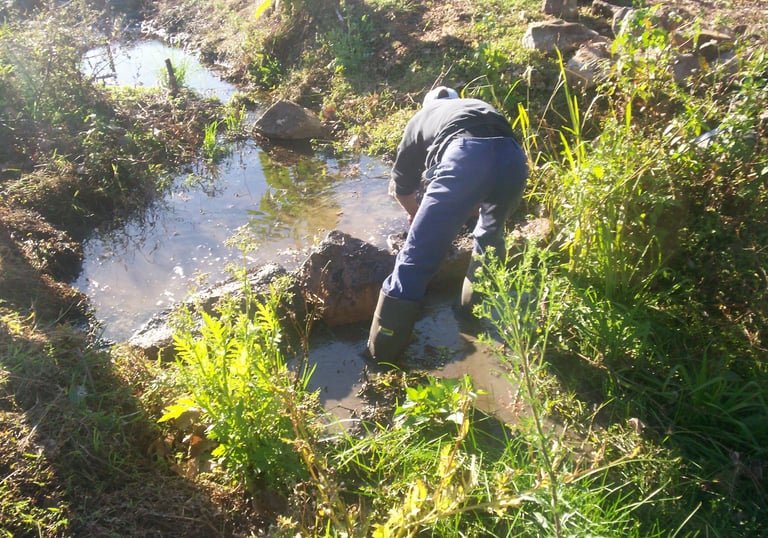

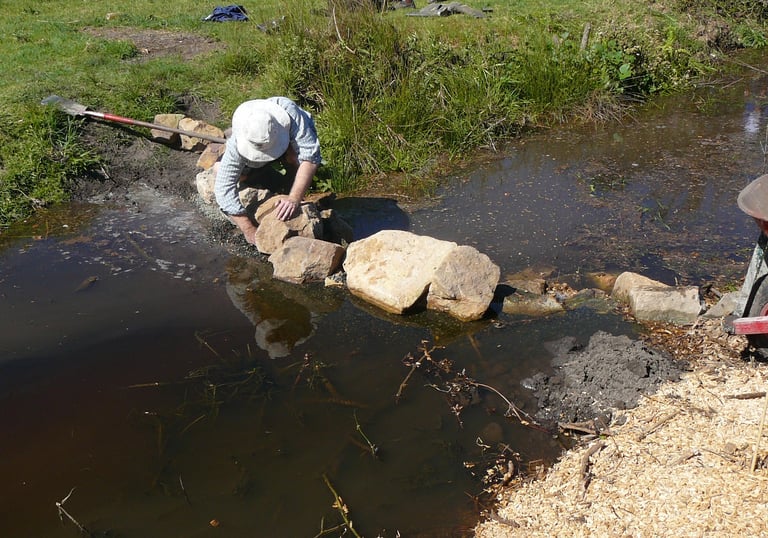

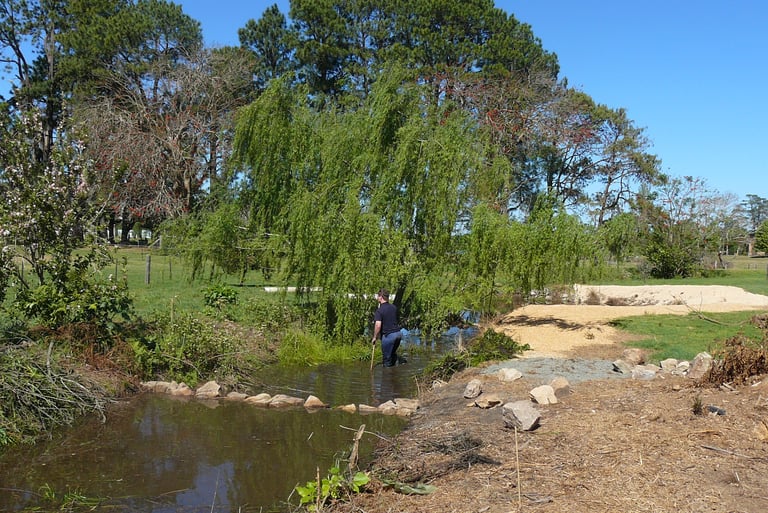

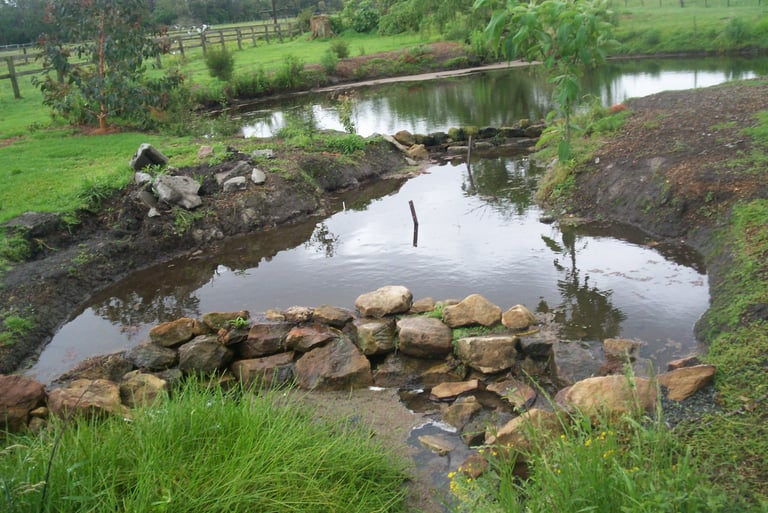

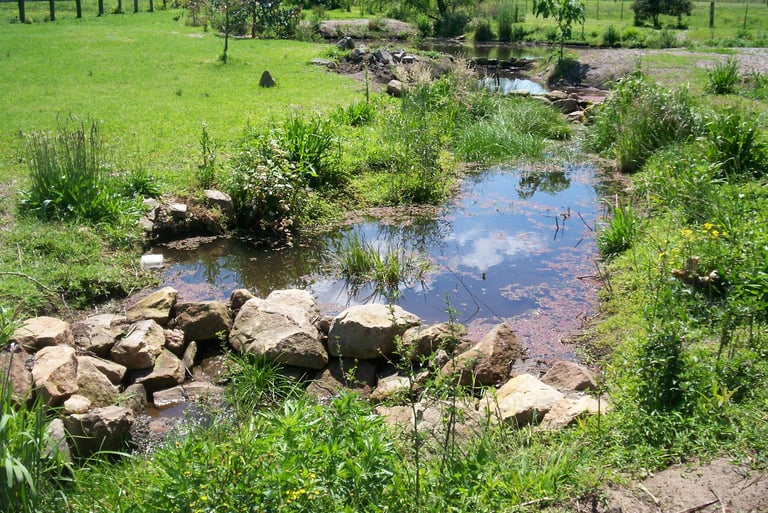


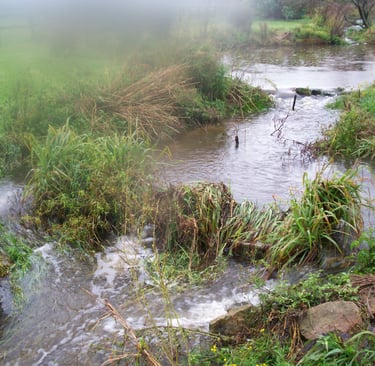
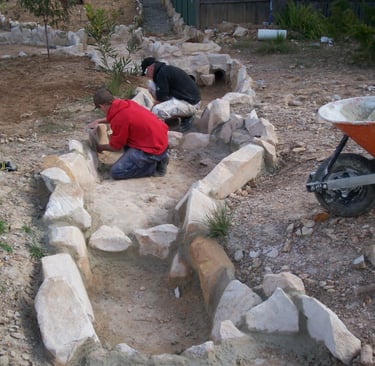
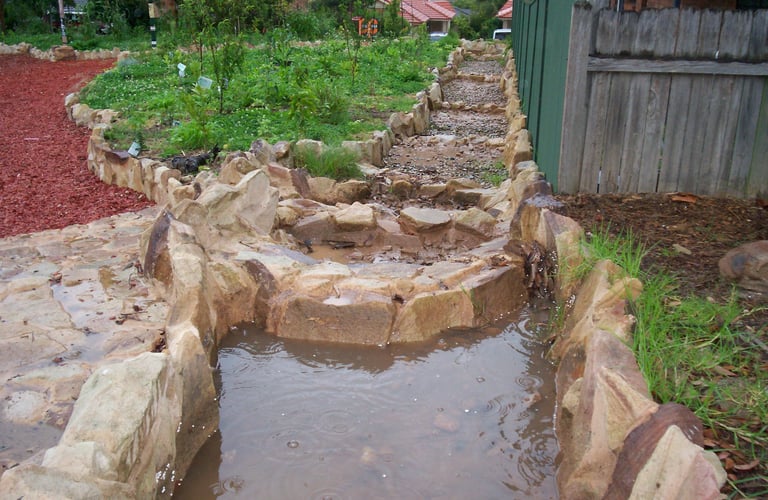
Below is a timeline of the Kariong Storm Water Catchment and Filtration System, retrofitted into an existing storm water channel. The program was run at the Frank Baxter Youth Justice Centre, with Aboriginal boys participating not only in the construction of the ponds and welands, they also completing a Certificate 2 in Conservation and Land Management at the same time. The idea of this site was to demonstrate that water-pulse restoration can be utilised as part of urban stormwater management systems, allowing us to reduce urban flooding and increase green corridors with little expense or infrastructure.
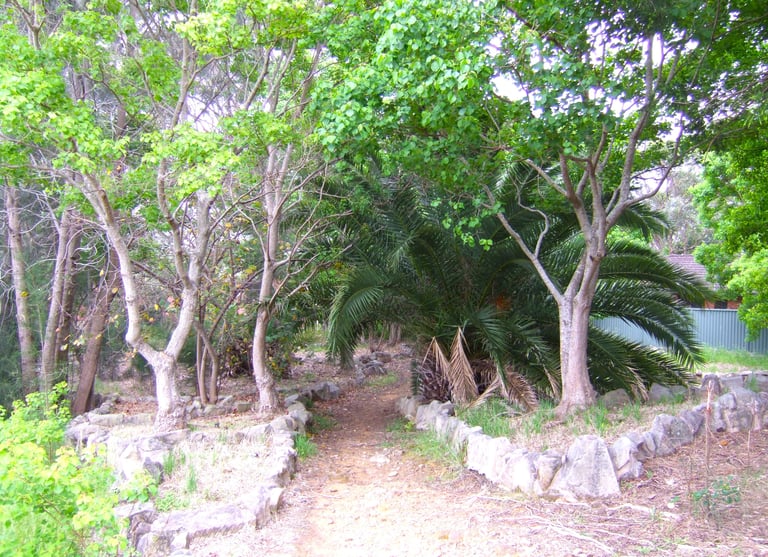
From 2009 to 2014, Ian was involved in helping to manage the site and during this period, community members began taking an interest in the project. From 2014 to the present time the site has been managed by the local community, who have planted a wonderfully diverse ecosystem that has established into a wonderland native corridor in less than 10 years.
Kariong Storm Water Catchment and Filtration System


Bateau Bay Community Park
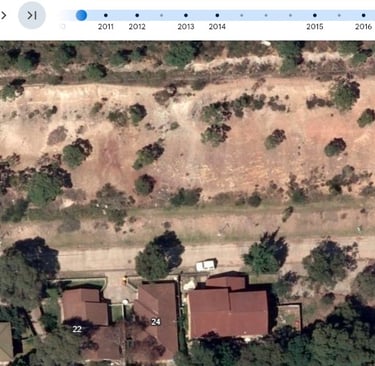
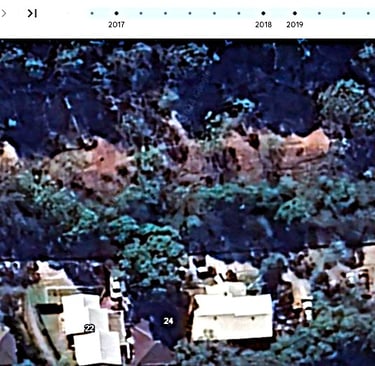
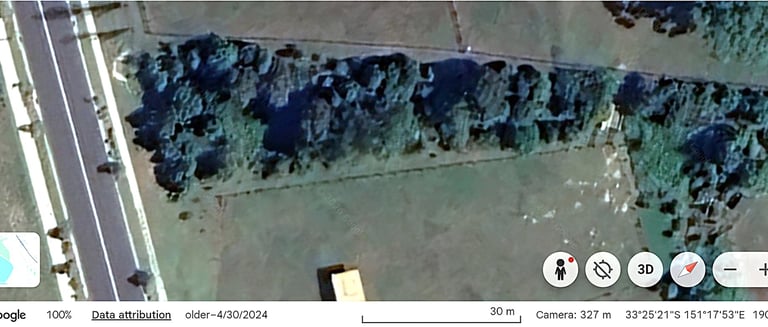
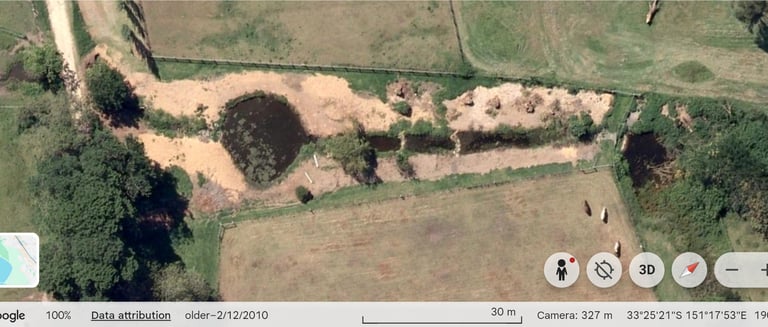
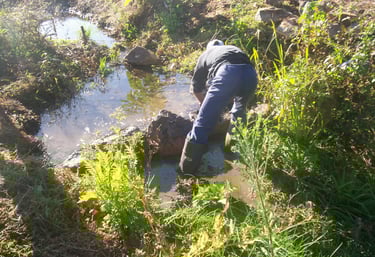
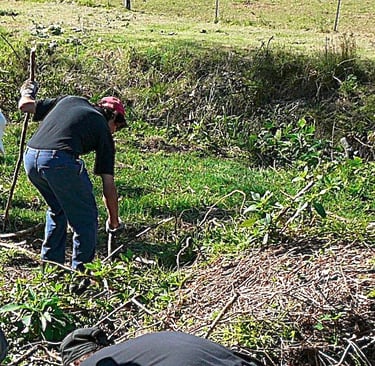
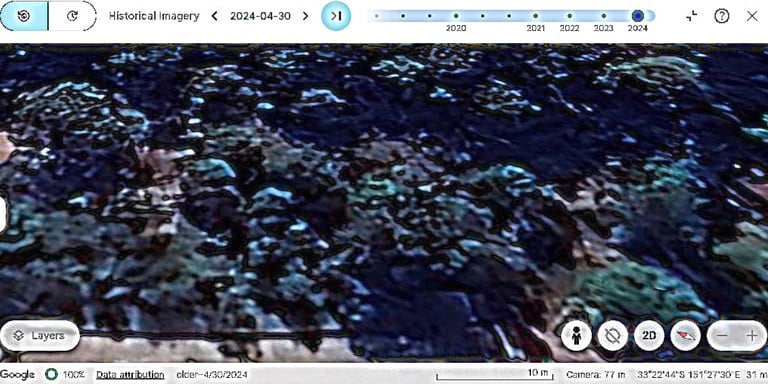
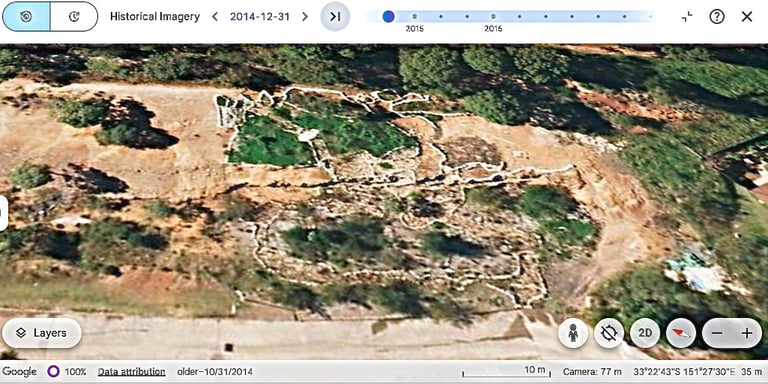
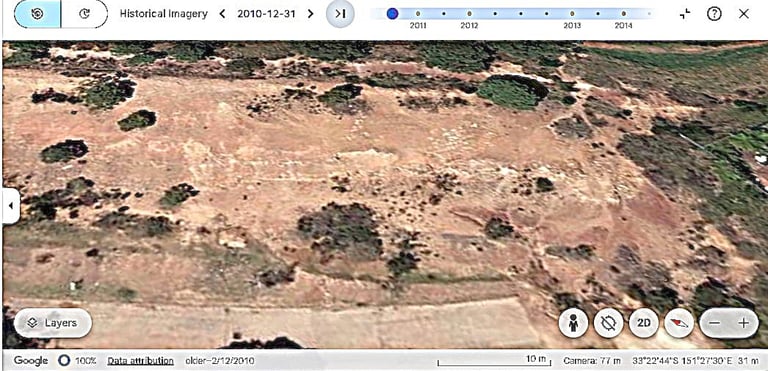
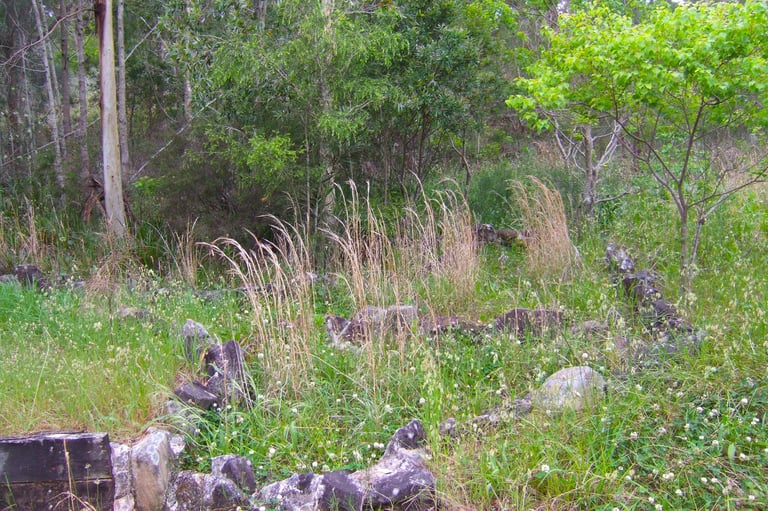
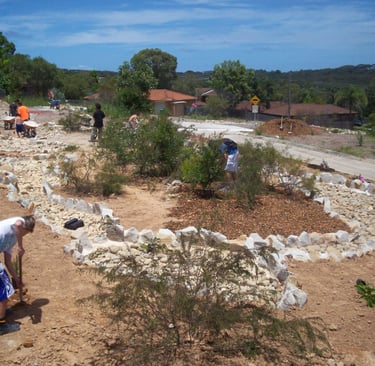
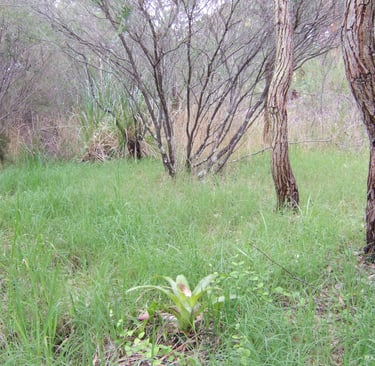
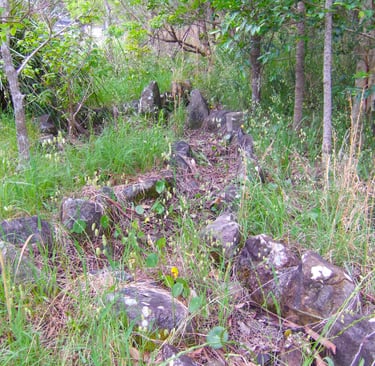
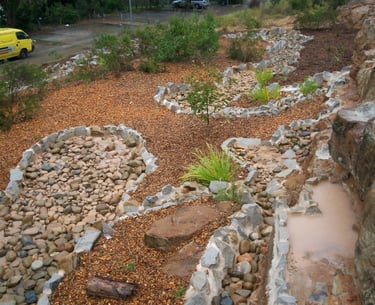
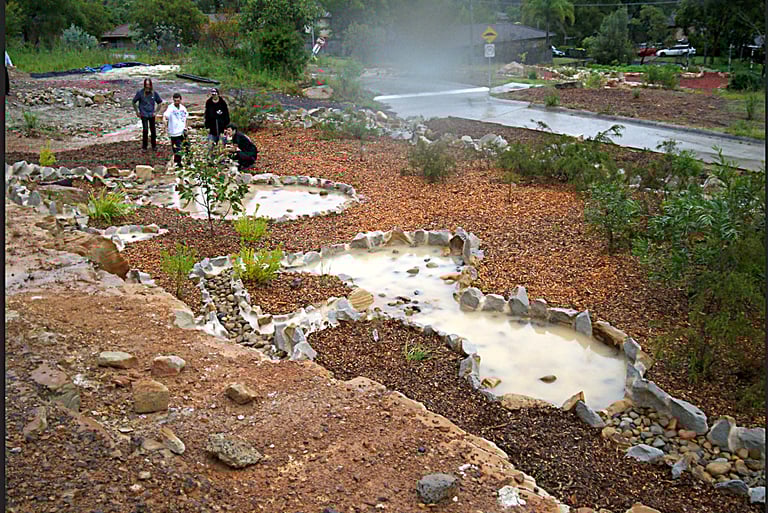
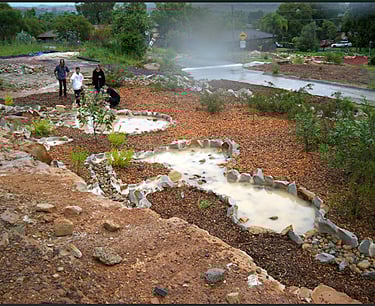
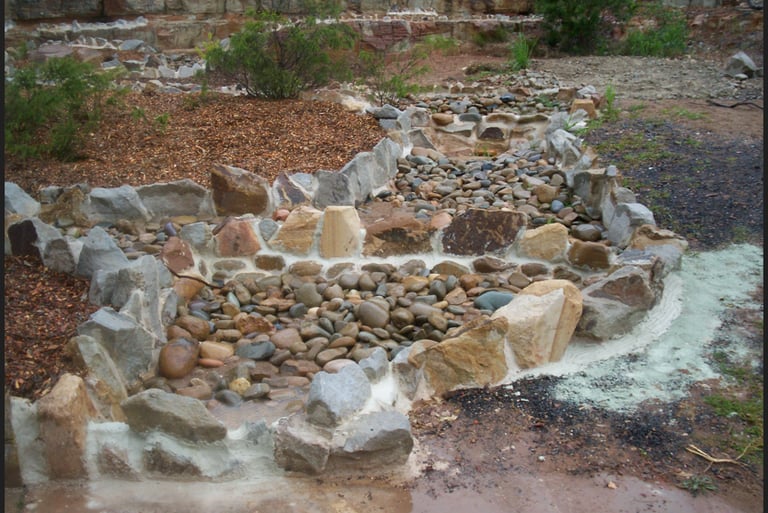
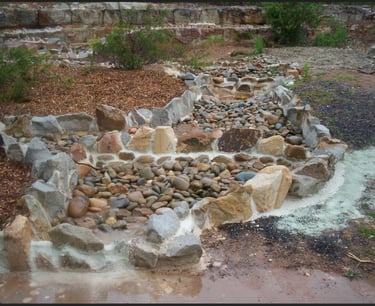
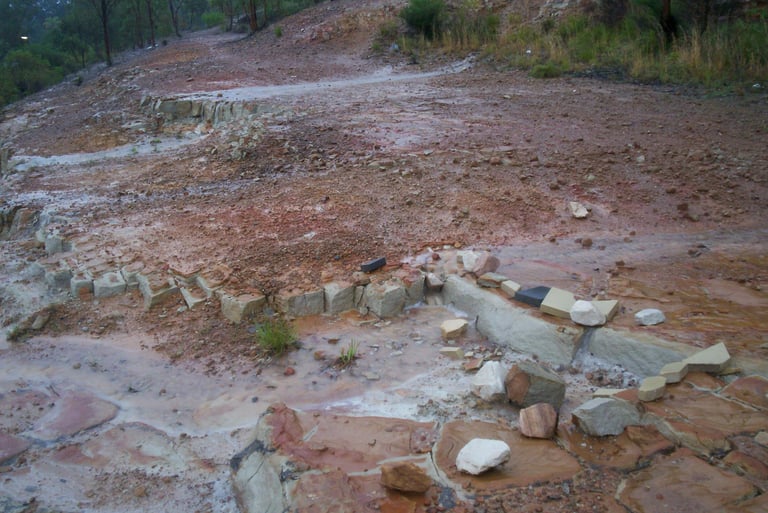
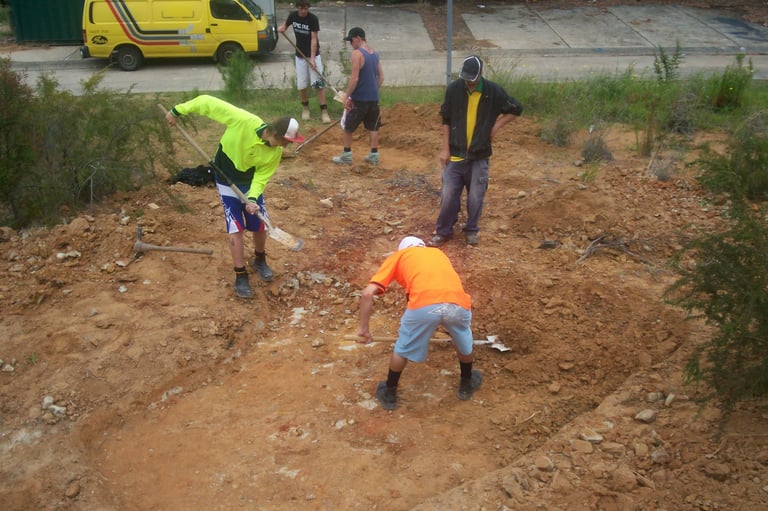
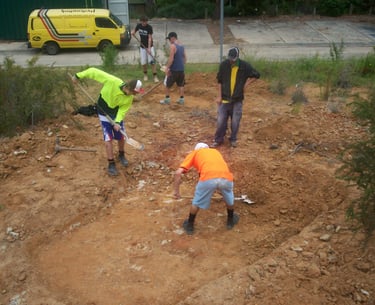
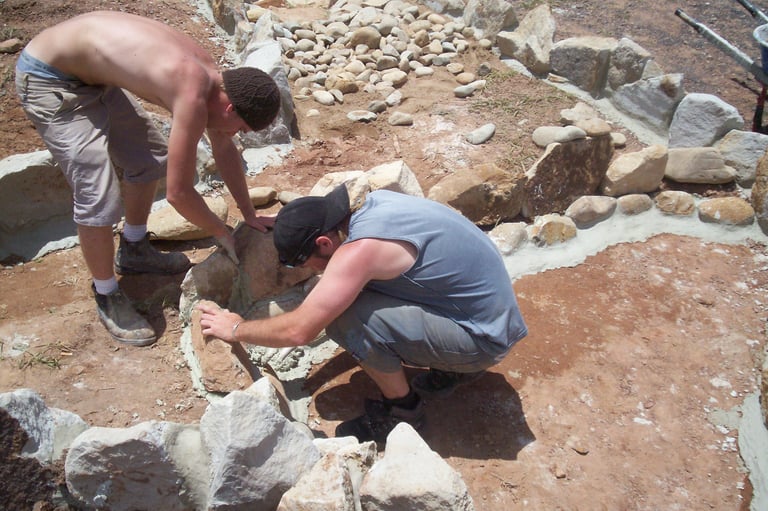
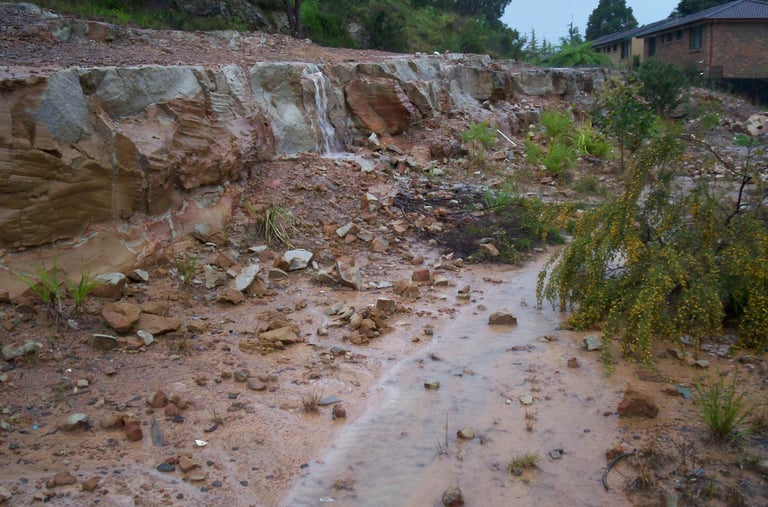
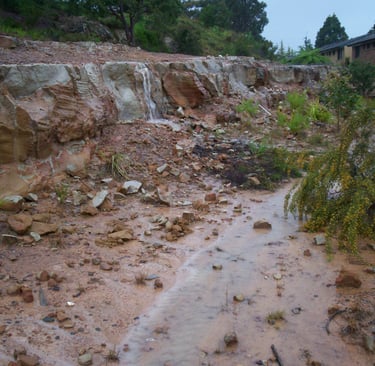
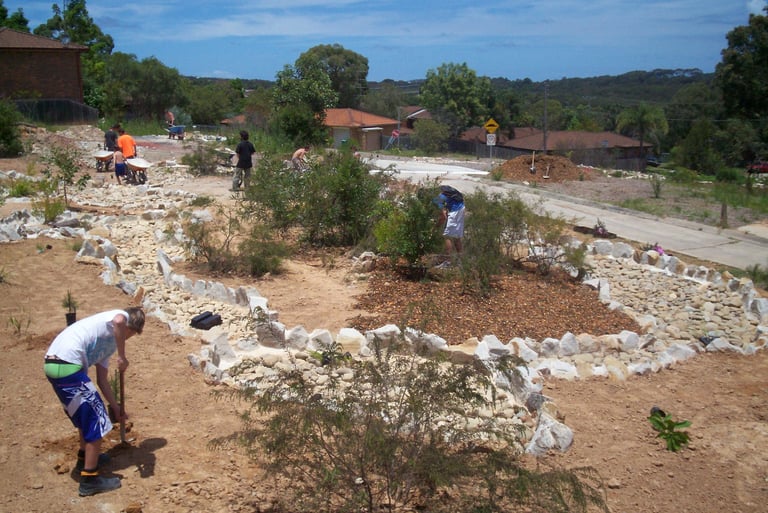
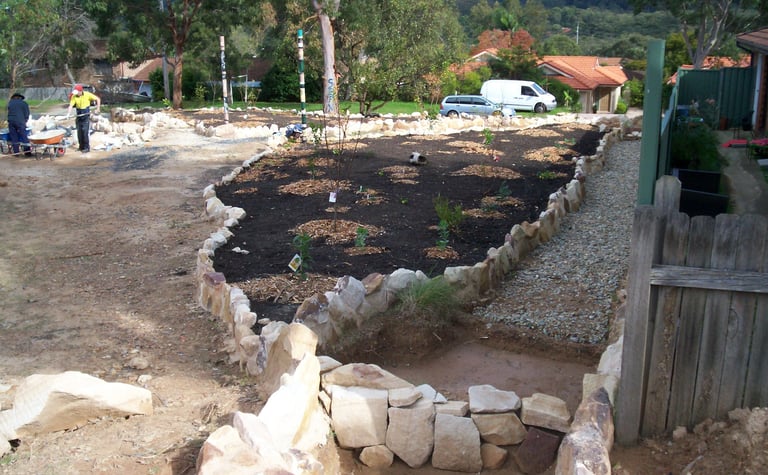
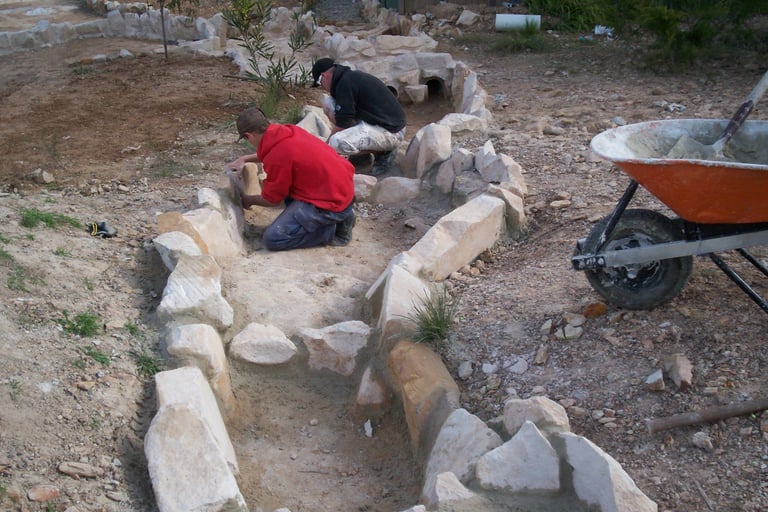
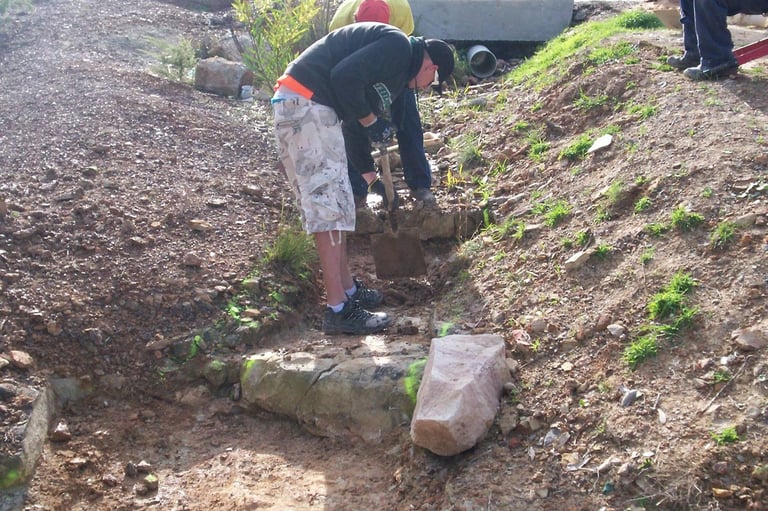
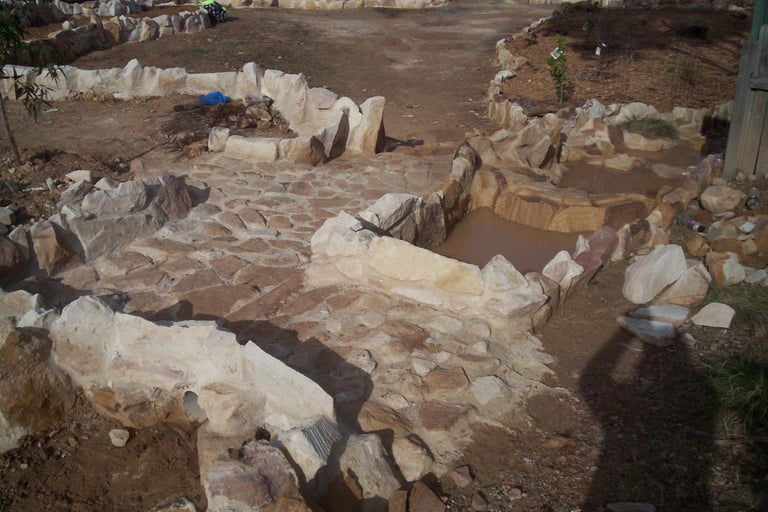
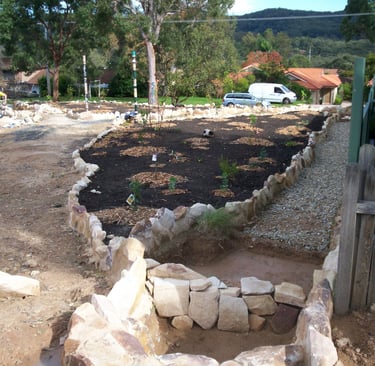
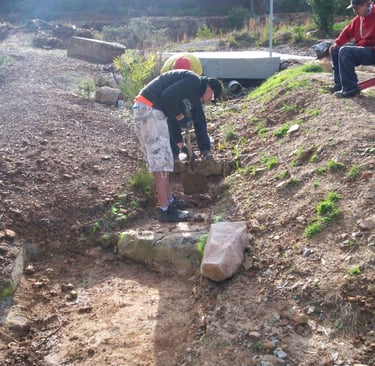
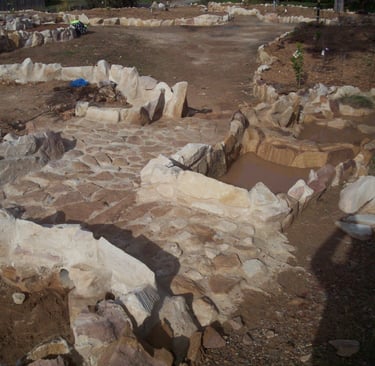
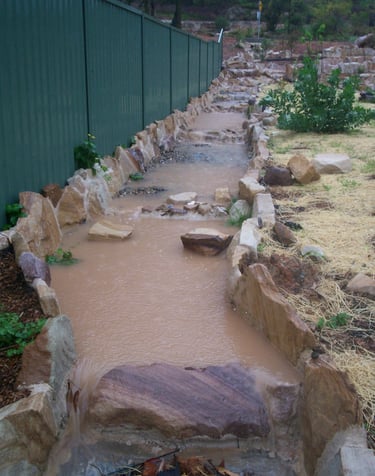
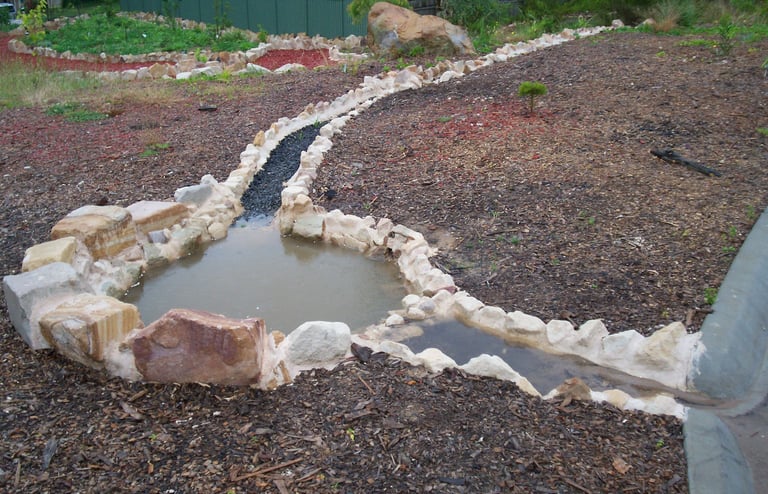
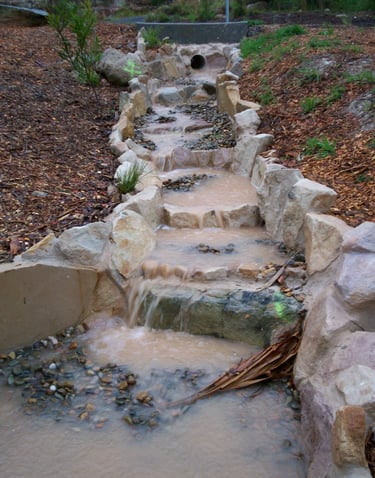
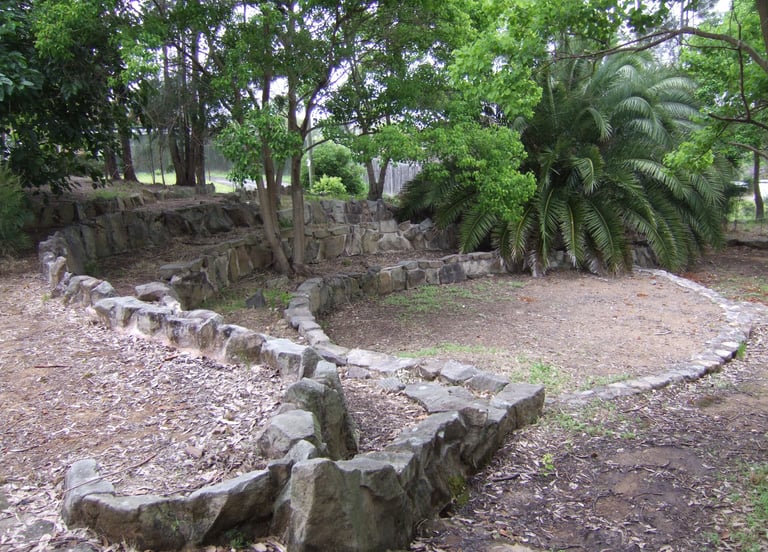
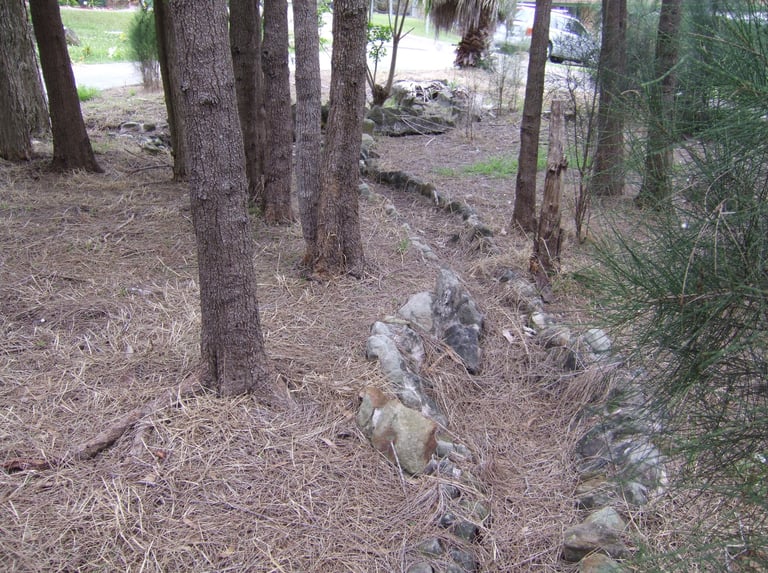
Below is a timeline series of photo's capturing the construction and the before and afters for the Bateau Bay Community Park. This site was an abandoned quarry adjacent to an urban housing estate, and my reason for picking this site was that I needed to demonstrate Water-Pulse restoration success even in the most degraded Urban Environments. See the time-stamped satellite image timeline at the end of this section.
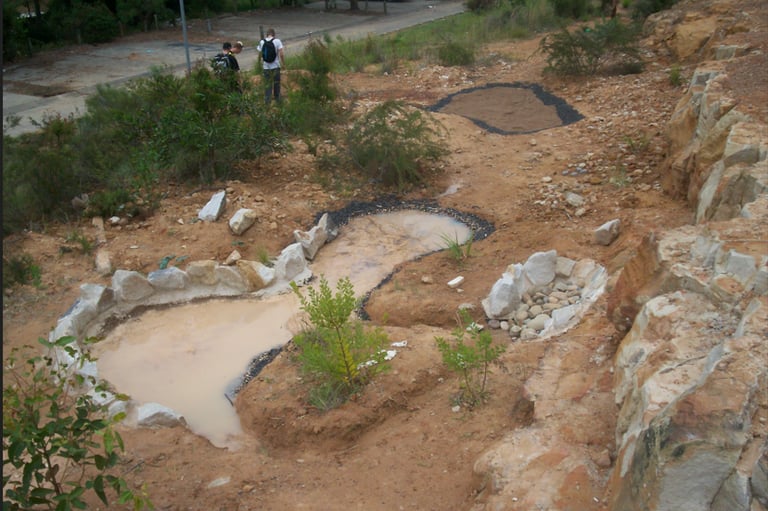
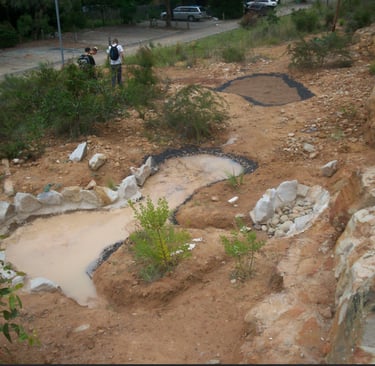
The upper water catchment was the quarry, profiled first in the timeline Photo series, and was the origin of flood water that inundated back yards in adjacent lower areas, dirty brown storm water runoff straight from the quarry. As part of the program, the upper section was transformed into a hanging wetland that slowed and spread the stormwater flow and filtered the water. This set up the hydrology pattern that allowed us to feed the lower main park with an in-ground irrigation system mimicking how natural systems function through water pulse dynamics and in-ground trickle feeds from the high ground to the low ground.
The park had several issues after completion, including vandalism and theft of many plants; however, the lack of any structured management over the years proved to be the project's biggest asset for demonstrating the success of Water-Pulse restoration and natural regeneration.
Hanging Wetland
=======================================================================================================================================
Photo Gallery
Water-Pulse Landscape Restoration Projects:
Reviving ecosystem function and the small water cycle, the heartbeat of the land, by weaving Traditional Cultural Knowledge with Australian Landscape Science. Below are a series of photos recording the timeline evolution of two major Water-Pulse Restoration programs implemented in urban environments on the Central Coast of Australia. At the time, Ian Sutton was working as a program co-ordinator and field supervisor for Equilibrium Future Solutions, a not-for-profit organisation based in Avoca Beach.
"This was the period of ground implementation and observation that cemented my understanding of water-pulse dynamics and the development of the Cooperative Succession framework. I would like to mention five people in particular, for without their efforts and input, I would not have been able to complete these demonstration sites. Thank you, Andrea Cingi; you saw something in me early and trusted my unusual methods, allowing me to safely develop both my social programs and land management approach. Thank you, Allison Duffy; you single-handedly kept Equilibrium Future Solutions running as I ran to keep up with the opportunities you created. Thank you, Mark Robertson; your assistance in the field made managing large, difficult social programs not only possible, your support made projects like Bateau Bay Community Park truly successful. I would also like to thank Phil Bligh; your guidance and support made my navigation and participation with the local Aboriginal communities a true, holistic experience that grounded me in Traditional Cultural thinking. Last but not least, I would like to thank Peter Andrews for your wealth of observational knowledge and field experience in landscape rehydration, which grounded my focus in landscape restoration onto Water-Pulse dynamics, ecological succession and atmospheric coupling".
Bateau Bay Community Park
Below is a timeline series of photo's capturing the construction and the before and afters for the Bateau Bay Community Park. This site was an abandoned quarry adjacent to an urban housing estate, and my reason for picking this site was that I needed to demonstrate Water-Pulse restoration success even in the most degraded Urban Environments. See the time-stamped satellite image timeline at the end of this section.
The upper water catchment was the quarry, profiled first in the timeline Photo series, and was the origin of flood water that inundated back yards in adjacent lower areas, dirty brown storm water runoff straight from the quarry. As part of the program, the upper section was transformed into a hanging wetland that slowed and spread the stormwater flow and filtered the water. This set up the hydrology pattern that allowed us to feed the lower main park with an in-ground irrigation system mimicking how natural systems function through water pulse dynamics and in-ground trickle feeds from the high ground to the low ground.
The park had several issues after completion, including vandalism and theft of many plants; however, the lack of any structured management over the years proved to be the project's biggest asset for demonstrating the success of Water-Pulse restoration and natural regeneration.
Hanging Wetland


Below is a timeline of the Kariong Storm Water Catchment and Filtration System, retrofitted into an existing storm water channel. The program was run at the Frank Baxter Youth Justice Centre, with Aboriginal boys participating not only in the construction of the ponds and welands, they also completing a Certificate 2 in Conservation and Land Management at the same time. The idea of this site was to demonstrate that water-pulse restoration can be utilised as part of urban stormwater management systems, allowing us to reduce urban flooding and increase green corridors with little expense or infrastructure.
From 2009 to 2014, Ian was involved in helping to manage the site and during this period, community members began taking an interest in the project. From 2014 to the present time the site has been managed by the local community, who have planted a wonderfully diverse ecosystem that has established into a wonderland native corridor in less than 10 years.
Kariong Storm Water Catchment and Filtration System









Community Park






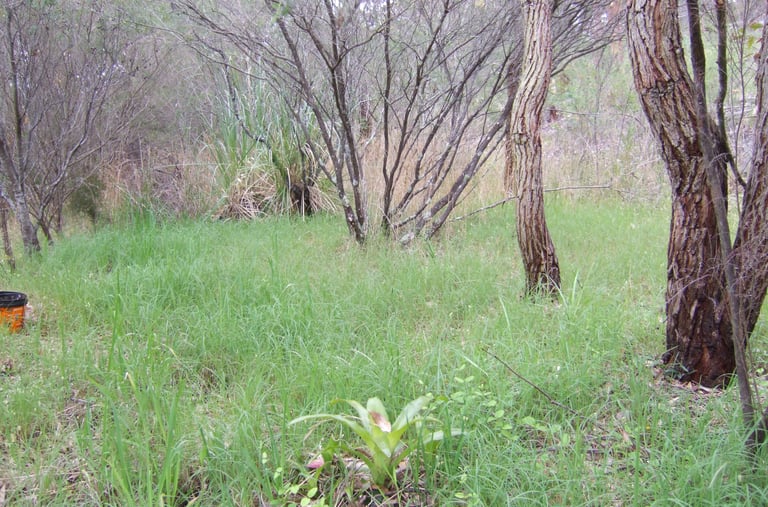
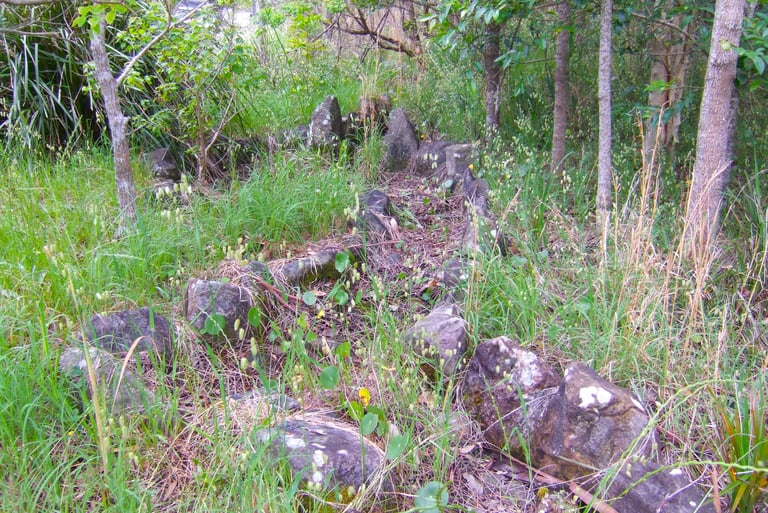
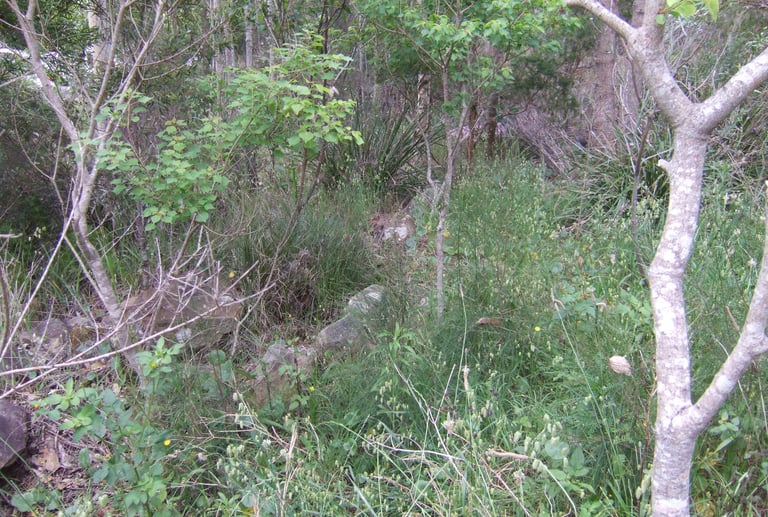
Community Park




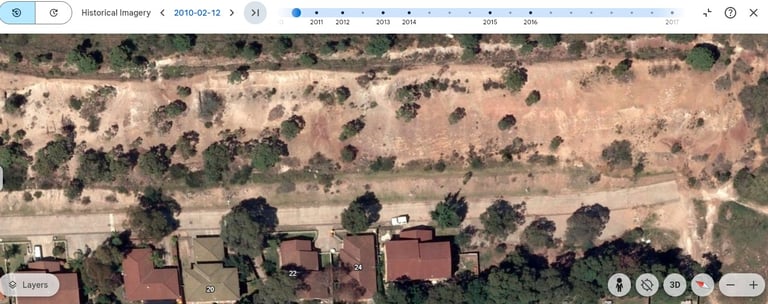

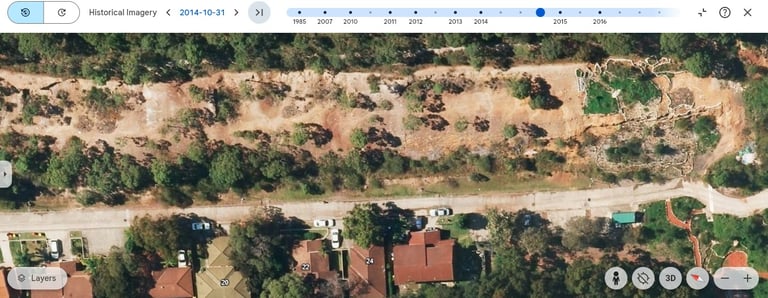

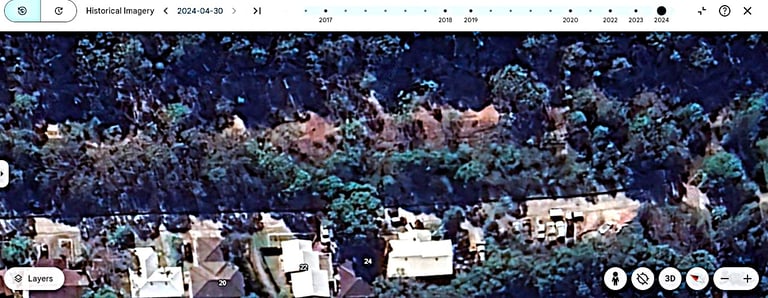


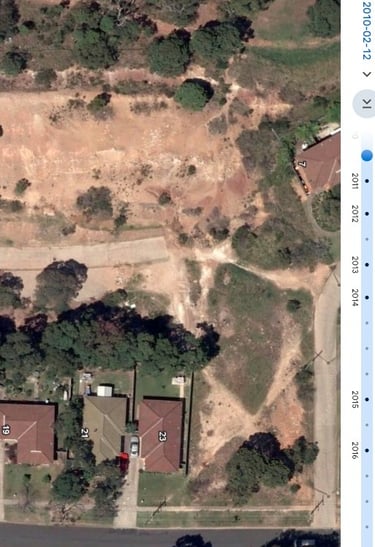


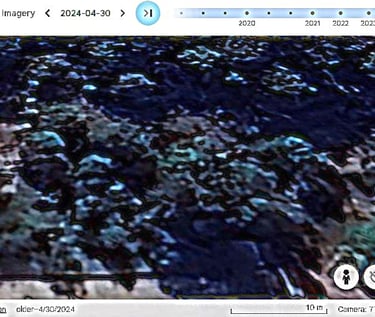
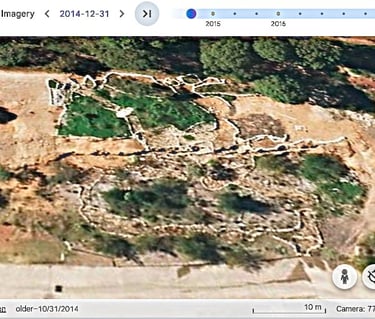
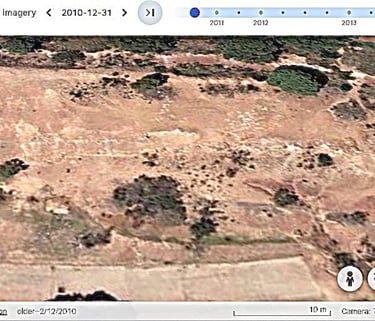
2010 prior construction 2014 1 year post construction 2024 11 years post construction
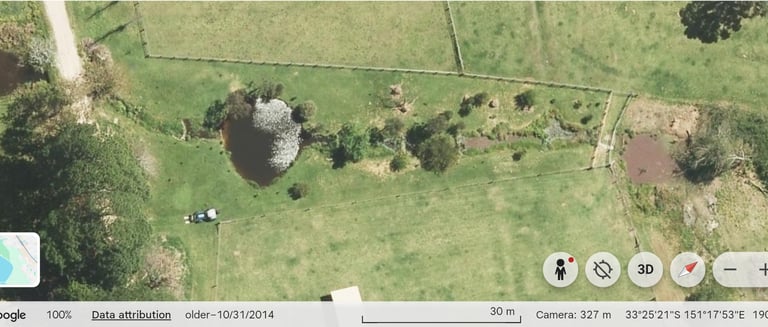
These last 4 time-stamped satellite images show the full length of the quarry and demonstrate how our water-pulse restoration intervention on the highest point on the slope has had emergent effects downhill, creating a much larger restoration footprint than the original rehydration groundworks.


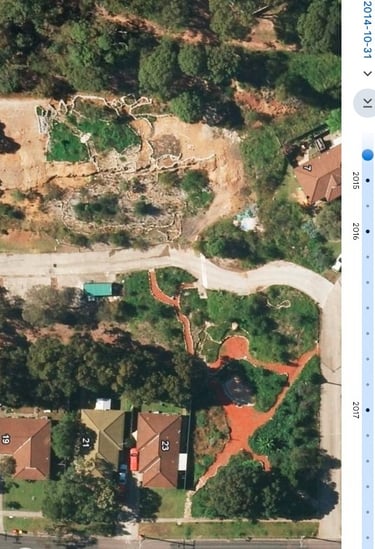
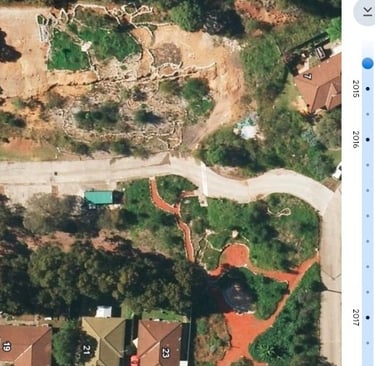
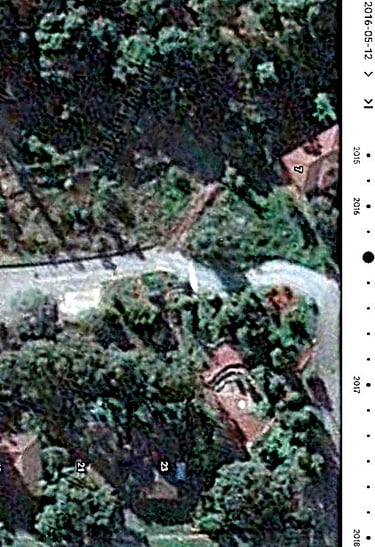
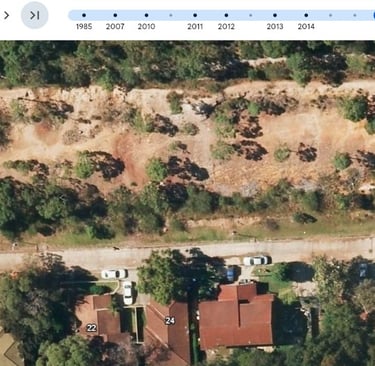
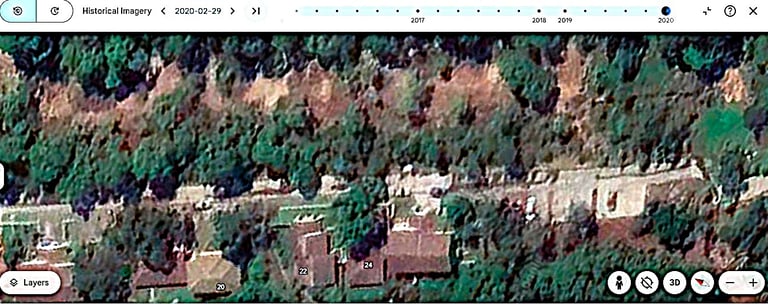
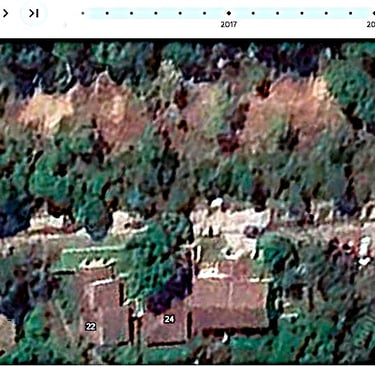
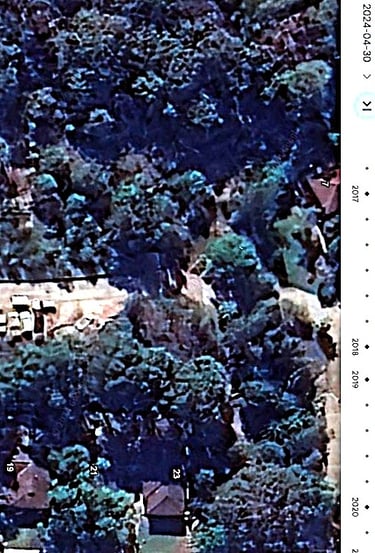
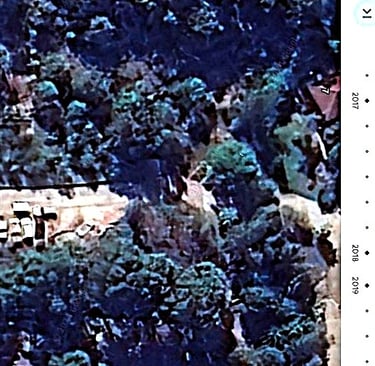
These last 4 time-stamped satellite images show the full length of the quarry and demonstrate how our water-pulse restoration intervention on the highest point on the slope has had emergent effects downhill, creating a much larger restoration footprint than the original rehydration groundworks.
Contact
Reach out to discuss your project needs and how we can support you
EMAIL Ian Sutton at
TwoEyedSeeing@proton.me
© 2025. All rights reserved.


